Home / Shelter Path / How to Read the Ground Before You Build Shelter
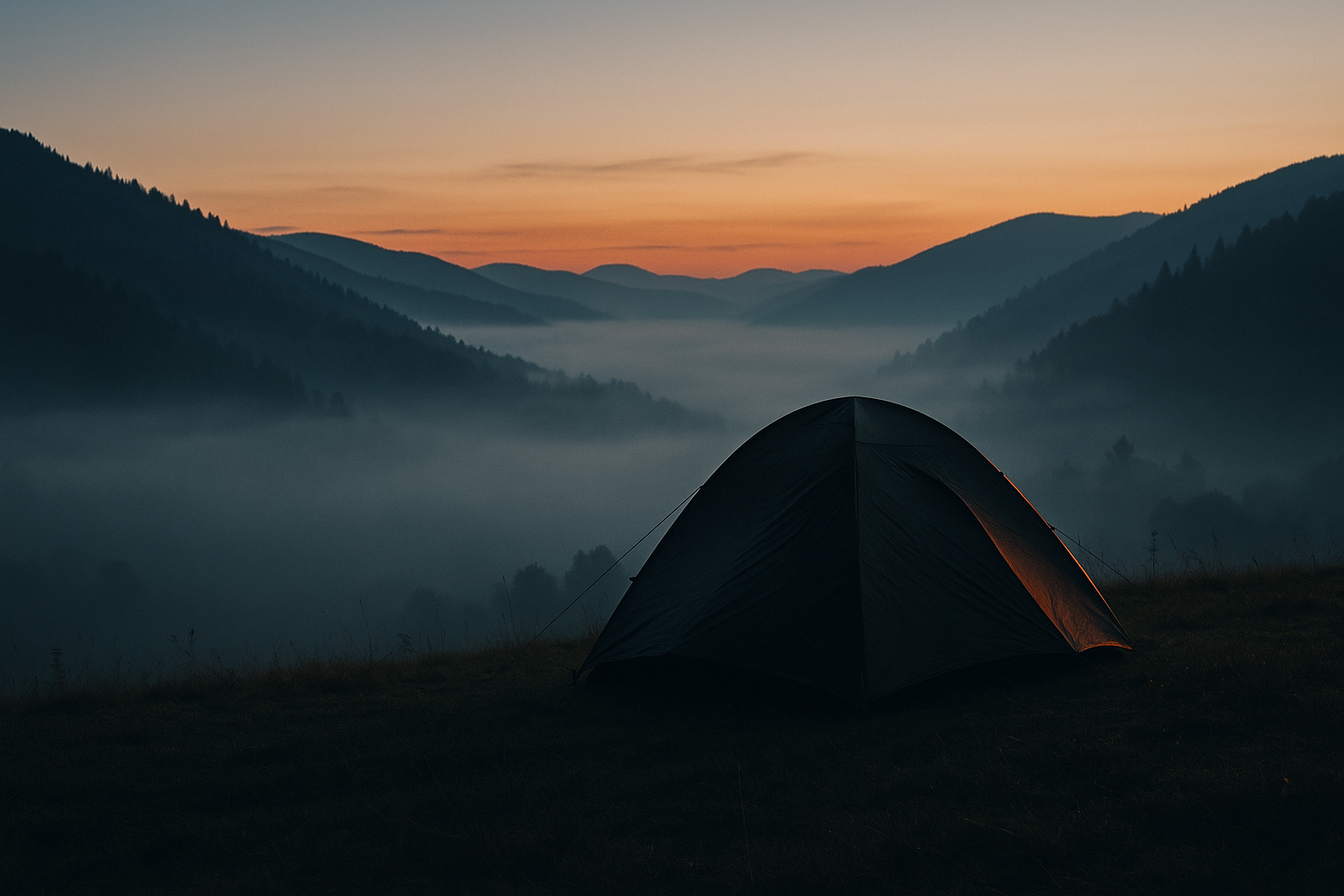
Wide establishing shot, dawn light, misty valley bench campsite, single tent silhouette, cool-to-warm gradient, illustrating how to read the ground before you build shelter.
SHELTER · FIELD GUIDE · STEP 1 OF 7

How to Read the Ground Before You Build Shelter

Most bad shelters aren't built badly — they're built in the wrong place. The ground gives seven free signs before you cut a single pole: slope, drainage, dead timber, wind channels, cold pockets, animal traffic, and moisture. Read them first and the site does most of the work for you.

Written by SRL Field Team · Updated 2026-07-12 ✓ Field Verified
first-overnightoff-grid-campbad-weather-check
SRL-SHL-001 · print-ready · SRL Editorial Standard · 3 sources cited
7 minRead Time
BeginnerDifficulty
3Sources Cited
Field Rules
  1. 01Pick the mild slope and lay your sleeping area across it, head slightly uphill.
  2. 02Get above and outside every channel you can identify. Give yourself margin.
  3. 03Site yourself on the leeward side of a rise, dense timber, or a solid deadfall.
  4. 04Sleep partway up the slope — on a bench, below the ridgeline, above the valley floor.
Get the Free Field Sheet Continue the Learning Path →
SHELTER PATH

Build this skill in sequence.

LEARNING PATH PROGRESS
Shelter Path — you're on step 1 of 7 7/7 published
WHAT YOU'LL LEARN

5 things, read in order.

INTERACTIVE DIAGRAMS

See the terrain, not just read it.

3 field diagrams from the SRL diagram system. Switch between them.

WHY THIS DIAGRAMIdentify which side of a slope sheds water safely and which side collects it, at a glance.
Slope and drainage cross-section NOT HERE SLEEP HERE water moves downhill
A gentle bench sheds water without sliding you downhill. The bowl on the left collects it.
WHY THIS DIAGRAMRecognize why a mid-slope bench stays warmer than the valley floor on a clear, calm night.
Cold-air pooling cross-section SLEEP HERE
Cold air drains downhill like water and pools in the lowest ground. A mid-slope bench stays warmer.
WHY THIS DIAGRAMTrace visible water-flow convergence back to the hazard zones it feeds before choosing a site.
Water flow convergence LOW GROUND
Water always finds the lowest, most direct path — read the channels before you camp below them.
SIGN 01 / 04

Read the Slope: Flat Is Not the Same as Level

Perfectly flat ground looks inviting and is often the worst choice. Water has to go somewhere, and flat ground in a low position is where it goes to sleep.

WHAT TO LOOK FOR

A gentle grade — enough that water moves past you, not enough that you slide downhill in your sleep.

WHY IT MATTERS

A slight grade sheds water. A bowl, hollow, or dead-flat basin collects it — a puddle waiting for weather.

WHAT TO DO

Pick the mild slope and lay your sleeping area across it, head slightly uphill.

FIELD TIP

Kneel and sight along the ground. Slope you can't see standing up becomes obvious at eye level.

COMMON MISTAKE

Choosing a spot for its comfort in dry weather. Ask what that ground looks like after four hours of rain, then choose.

SIGN 02 / 04

Follow the Water: Drainage, Runnels, and Old Flood Lines

Water leaves a record. Learn to read it and you won't be flooded out.

WHAT TO LOOK FOR

Shallow channels and runnels cut into the soil, even dry ones. Fans of leaves, twigs, and silt deposited in a line.

WHY IT MATTERS

Everything you see was carried by water at some point, and will use the same path again.

WHAT TO DO

Get above and outside every channel you can identify. Give yourself margin.

FIELD TIP

Debris lodged waist-high on a tree trunk is a flood line, not decoration.

COMMON MISTAKE

Camping in a dry wash or gully because it's sheltered and sandy. Those are the most comfortable-looking hazards in the backcountry — a storm miles away can send water down them under a clear sky.

SIGN 03 / 04

Feel the Wind: Channels, Gaps, and Exposed Shoulders

Wind steals heat faster than cold air alone ever will. Reading where it runs is half of staying warm.

WHAT TO LOOK FOR

The shape of the land funnels wind the same way it funnels water — saddles, gaps, and open shoulders.

WHY IT MATTERS

Gaps and draws accelerate air. A ridgeline or exposed shoulder gives you a view, and takes your warmth.

WHAT TO DO

Site yourself on the leeward side of a rise, dense timber, or a solid deadfall.

FIELD TIP

One-sided tree crowns and branches trailing in a single direction record the prevailing wind for you.

COMMON MISTAKE

Judging wind by the hour you arrive. Evening calm is unreliable — the wind that matters often arrives after dark.

SIGN 04 / 04

Cold Pockets: Why the Valley Floor Is the Coldest Bed You Can Choose

Cold air behaves like water. It is heavier than warm air, it flows downhill, and it pools in the lowest ground it can find.

WHAT TO LOOK FOR

Hollows, basins, valley bottoms, and flat ground beside a creek.

WHY IT MATTERS

On a clear, calm night, cold air drains off the slopes and settles low — the bottom can run substantially colder.

WHAT TO DO

Sleep partway up the slope — on a bench, below the ridgeline, above the valley floor.

FIELD TIP

Heavy dew, lingering frost, and low-settling mist mark exactly where cold air collects.

COMMON MISTAKE

Camping right beside water for convenience. The streamside flat is usually the coldest, dampest ground in the whole drainage.

DECISION CARD

If a site fails one sign badly, walk on. There is almost always better ground within a few minutes' walk, and the ground you choose does more work for you than anything you build.

MISTAKE CARD

Building where you stopped walking instead of where you surveyed. Fatigue picks bad ground — give yourself fifteen minutes to loop the area before committing.

FIELD RULE

Look first. Test small. Act only after the sign is clear.

HONEST LIMITATIONSThis is a visual site-read, not a guarantee against weather. Conditions can change after you've built — recheck drainage and wind if weather shifts overnight.
This article's actual product
1-PAGE FIELD SHEET
How to Read the Ground Before You Build Shelter
PDF · LETTER/A4
Slope: gentle grade, not a bowl — kneel and sight along the ground
Drainage: no channels, runnels, or flood lines above or below you
Wind: tucked leeward of a rise, timber, or deadfall
Cold pockets: on a bench, below ridgeline and above the valley floor
Ground: driest patch available, insulate thick underneath
Open Printable Field Sheet
print-ready·offline-first·SRL-SHL-001
Get the Free Field Sheet
Free, direct download — no account required.
SOURCES

What this guide is built on.

  • U.S. Army FM 3-05.70 Survival — site selection chapter
  • Traditional bushcraft siting references
  • Basic hydrology / slope-drainage field guides

See our Editorial Standard for how sources are reviewed.

RELATED SKILLS

Keep the next reference close.

NEXT IN SHELTER PATH — STEP 2 OF 7

How to Spot Widowmaker Trees Before Camping

A clean campsite floor tells you nothing about what's above you. Standing dead t…

Continue the Path →