Home / Fire Path / How to Build Fire With Wet Wood
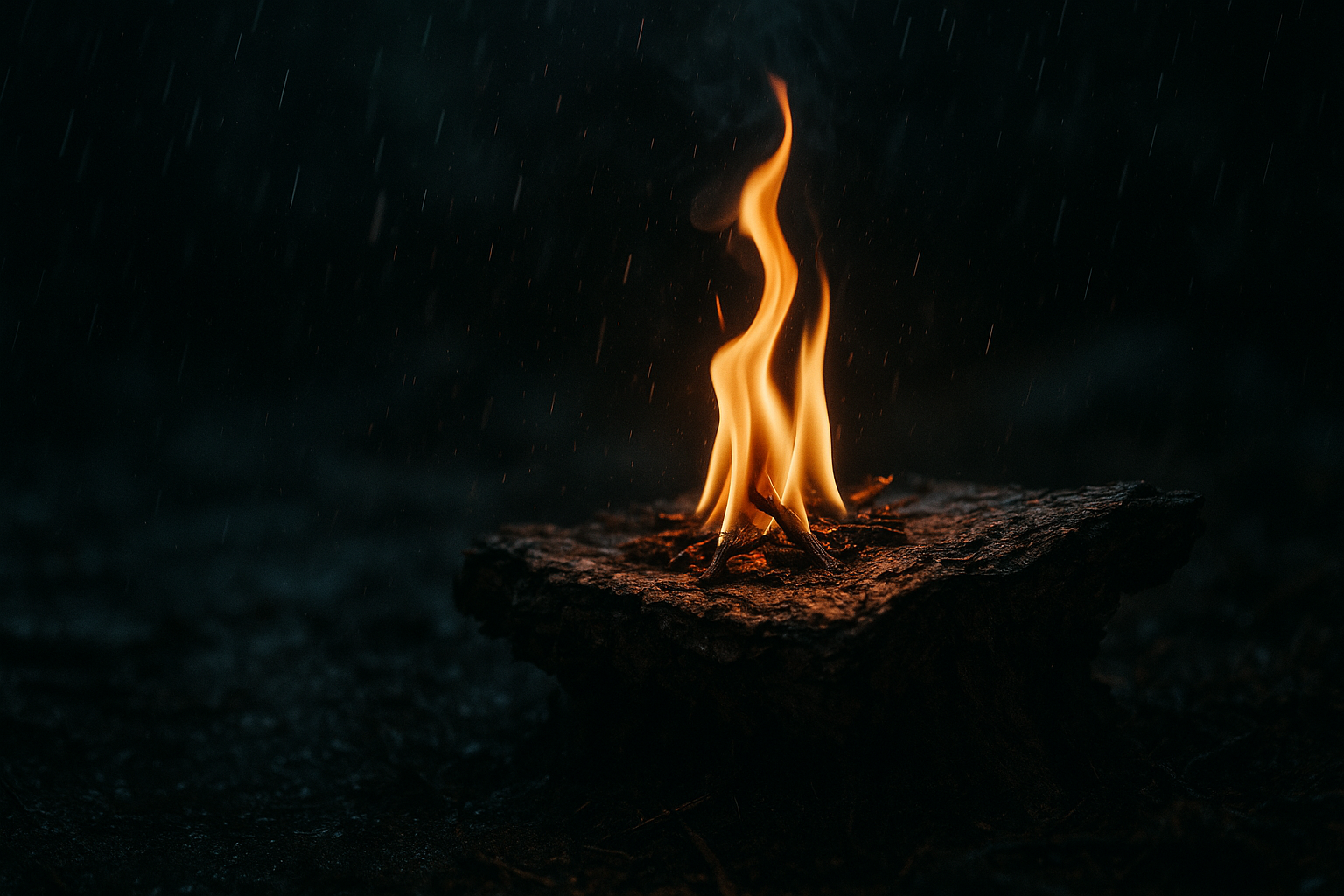
Close, warm-lit shot of a small fire catching on a raised bark platform in the rain, dramatic contrast between fire glow and dark wet surroundings, illustrating how to build fire with wet wood.
FIRE · FIELD GUIDE · STEP 2 OF 7

How to Build Fire With Wet Wood

Wet-wood fires are won or lost before you ever strike ignition. This guide covers graduated fuel preparation, building off wet ground, and shielding the first thirty fragile seconds of a flame.

Written by SRL Field Team · Updated 2026-07-12 ✓ Field Verified
wet-weatherfire-craft
SRL-FIR-002 · print-ready · SRL Editorial Standard · 2 sources cited
6 minRead Time
IntermediateDifficulty
2Sources Cited
Field Rules
  1. 01Build three piles by thickness (pencil-lead, pencil, thumb) entirely from split, dry-interior wood before lighting anything.
  2. 02Lay a platform of bark or dry branches first, then build your fire lay on top of it.
  3. 03Light in a wind-sheltered spot away from dripping canopy, cupping the flame until the smallest fuel stage catches fully.
Get the Free Field Sheet Continue the Learning Path →
FIRE PATH

Build this skill in sequence.

1Find Dry2Build Fire3Not yet published4Not yet published5Not yet published6Not yet published7Not yet published
LEARNING PATH PROGRESS
Fire Path — you're on step 2 of 7 2/7 published
WHAT YOU'LL LEARN

4 things, read in order.

INTERACTIVE DIAGRAMS

See the terrain, not just read it.

2 field diagrams from the SRL diagram system. Switch between them.

WHY THIS DIAGRAMStage all three fuel sizes before first ignition, in the order wet-wood fires actually need.
Fuel graduation stages Pencil-lead thickness lightest Pencil thickness medium Thumb thickness sustaining
Stage all three fuel sizes before you light anything.
WHY THIS DIAGRAMSee why a dry platform under the fire matters as much as the fuel stacked on it.
Platform off wet ground Fire lay top Bark / dry-branch platform middle Wet ground avoid direct contact
A dry platform keeps rising ground moisture from smothering the fire.
SIGN 01 / 03

Process Down to Dry Fuel

Wet-wood fires are won in preparation, not ignition.

WHAT TO LOOK FOR

Standing dead wood, then progressively smaller material split from its dry interior.

WHY IT MATTERS

The fire lay needs graduated dry fuel staged and ready before a match is struck.

WHAT TO DO

Build three piles by thickness (pencil-lead, pencil, thumb) entirely from split, dry-interior wood before lighting anything.

FIELD TIP

Every piece in your smallest pile should snap cleanly, not bend.

COMMON MISTAKE

Lighting tinder before the next fuel stage is ready and within reach — a good flame dies waiting for you to process more wood.

SIGN 02 / 03

Build a Platform Off Wet Ground

A fire on saturated ground loses heat downward before it can grow.

WHAT TO LOOK FOR

Bark slabs, flat dead branches, or dry rocks to build a base layer above wet or saturated soil.

WHY IT MATTERS

A fire laid directly on wet ground loses heat downward and can be smothered by rising moisture.

WHAT TO DO

Lay a platform of bark or dry branches first, then build your fire lay on top of it.

FIELD TIP

If the platform feels damp after a few minutes, add another dry layer before lighting.

COMMON MISTAKE

Skipping the platform because the ground looks dry on the surface — surface-dry and saturated-underneath is common after rain.

SIGN 03 / 03

Shield the Ignition, Not Just the Fuel

The first thirty seconds of flame are the most fragile part of the whole process.

WHAT TO LOOK FOR

A wind-blocking position and a feather-stick or fine-shaving bundle as your actual ignition point.

WHY IT MATTERS

Wind or dripping water at the ignition stage undoes all your fuel preparation.

WHAT TO DO

Light in a wind-sheltered spot away from dripping canopy, cupping the flame until the smallest fuel stage catches fully.

FIELD TIP

Once the pencil-lead pile is fully engaged and crackling, the fire is past its most fragile point.

COMMON MISTAKE

Lighting directly under a tree canopy that's still dripping from the earlier rain.

DECISION CARD

If your first ignition attempt fails, rebuild the smallest fuel stage before striking again — don't just try again with the same damp material.

MISTAKE CARD

Using excessive tinder or accelerant to compensate for poor preparation instead of re-processing the wood.

FIELD RULE

Preparation wins wet-wood fires, not ignition method.

HONEST LIMITATIONSThis assumes a reliable ignition source is already on hand and standing dead wood is available. In saturated or rainforest terrain, this can take considerably longer than a dry-day fire.
This article's actual product
1-PAGE FIELD SHEET
How to Build Fire With Wet Wood
PDF · LETTER/A4
Three fuel piles staged by thickness, all snap-tested dry
Platform of bark or dry branches built above wet ground
Wind-sheltered ignition spot chosen, clear of dripping canopy
Feather stick or fine shavings ready as the ignition point
Next fuel stage within arm's reach before lighting
Open Printable Field Sheet
print-ready·offline-first·SRL-FIR-002
Get the Free Field Sheet
Free, direct download — no account required.
SOURCES

What this guide is built on.

  • Traditional bushcraft fire-craft references
  • Basic wilderness fire safety guidance

See our Editorial Standard for how sources are reviewed.

PREVIOUS STEP
RELATED SKILLS

Keep the next reference close.

NEXT IN FIRE PATH — STEP 3 OF 7

Not yet published

This step is planned but not live yet.